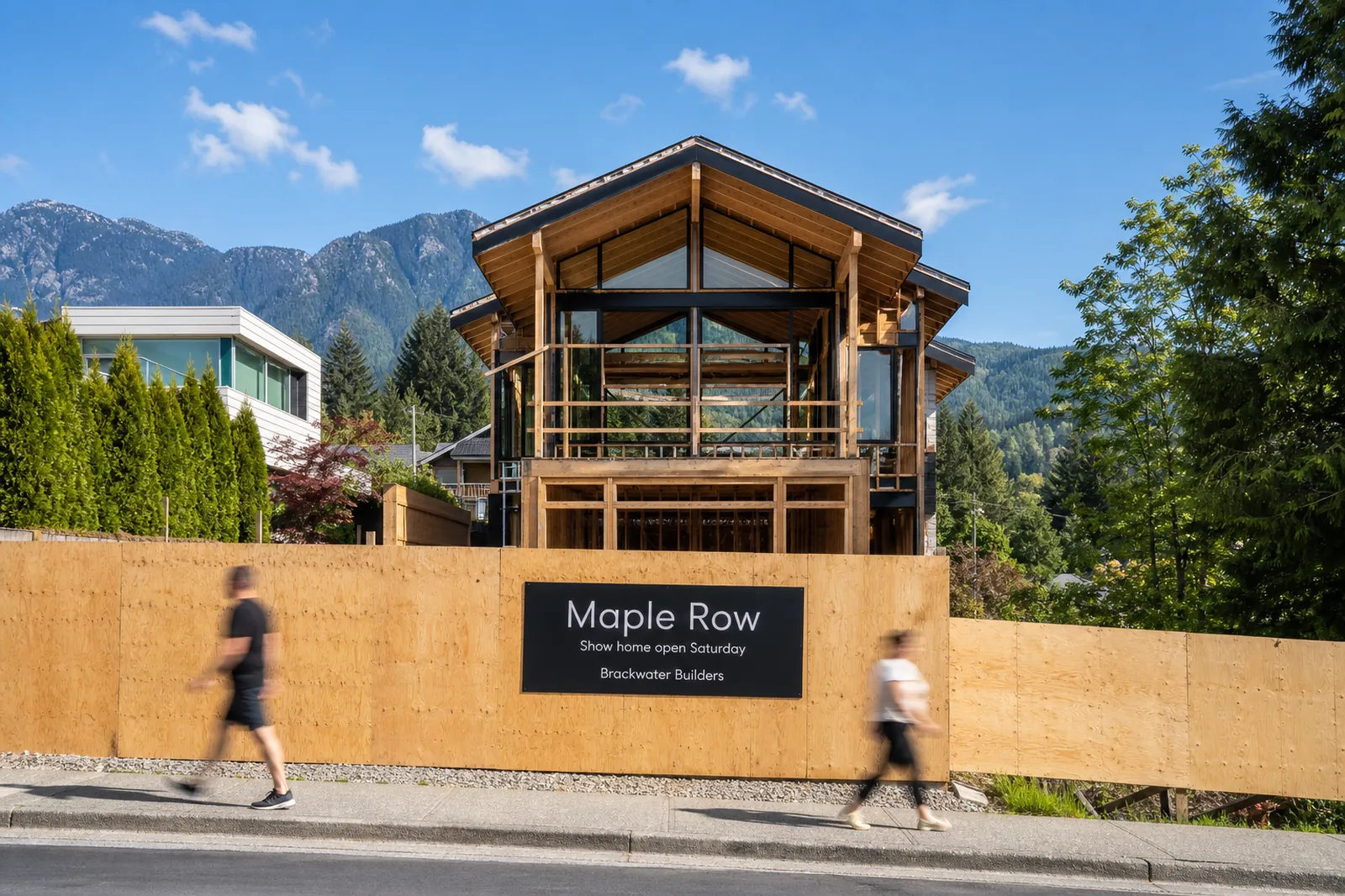
A sign on the hoarding gets people to the door. What happens next is up to the door.
Online advertising for a home builder works the same way. The ad is the sign. The project page is the show home. If the sign promises a bright three-bedroom and the door opens onto a half-finished page with a phone number that rings out, nobody is buying.
Short answer. Advertise each project on its own page with one clear next step, and make sure the ad, the page and the inquiry form all say the same thing. Then make sure someone answers when they call.
Project first, campaign second
A builder sells one project at a time, so advertise one project at a time. Before spending anything on ads, give each project a page a buyer can use without phoning. It should answer, near the top:
Checklist
What a project page should answer
- Where it is. The neighbourhood and how to get there. “Convenient location” doesn’t help anyone find it.
- What is being built. Home types, sizes, and what makes this project different from the last one.
- What stage it is at. Coming soon, selling now, move-in ready. Buyers plan around this.
- How to see it. Show home hours, an appointment form, or both.
- What happens after they get in touch. Who replies, and roughly how. Not a promise of speed, just clarity.
Long Square Studio.
If two projects share one page, buyers of both will have to work harder than they should. Give each its own.
What the ad, the page and the form each need
Buyers notice when the sign, the show home and the sales desk tell different stories. Keep them in step.
Keep them in step
Ad, page, form
- The ad names the project and one reason to click. It doesn’t try to sell the whole company.
- The page repeats the same name and the same reason, so the visitor knows they are in the right place.
- The form asks for what you need to reply and not much more, and says what happens next. A long form on a small phone is where a lot of interested people quietly leave.
Long Square Studio.
Then check them in that order on an actual phone, because that is where most of your visitors are. Tap your own ad. Find your own page. Fill in your own form. It takes ten minutes and finds more than any report.
Paid search, local search, or both
They do different jobs.
- Paid search puts the project in front of people searching now, in the areas you choose. It works best when the project has a page to send them to and a budget that matches the areas and the season.
- Local search (your Google Business Profile and website) helps people who look for you by name, or for your sales centre. It keeps working between campaigns, and it needs accurate details to do it.
A builder usually wants both, in this order of effort: get the profile and the project pages right, then add paid search for the projects that need a push.
Timing on the North Shore
Plan the campaign around your sales calendar, not the other way round: when the show home opens, when the next phase releases, when the last homes are left. And since a wet Tuesday can empty a show home, have a plan for viewings that doesn’t depend on the weather.
What to measure, honestly
Count what you can stand behind: inquiries by project, calls and forms separately, and where each came from as best you can tell. Some buyers will see an ad, search your name later and call. No tool will connect all of that perfectly, so treat the numbers as a guide, not a verdict. We report what the data can support and say where it can’t.
A few common questions
What are some effective marketing strategies for home builders?
Give each project its own page, keep the ad, page and form consistent, look after your Google Business Profile and sales-centre details, and use paid search for the projects and seasons that need it. Reviews and real photographs of completed homes help too, when you have permission to use them.
When it’s worth getting help
If your projects share one page, your ads and your pages tell different stories, or nobody is sure which inquiries came from where, we can review the path from ad to inquiry and recommend one thing to fix first. If the door is stuck, start an inquiry.